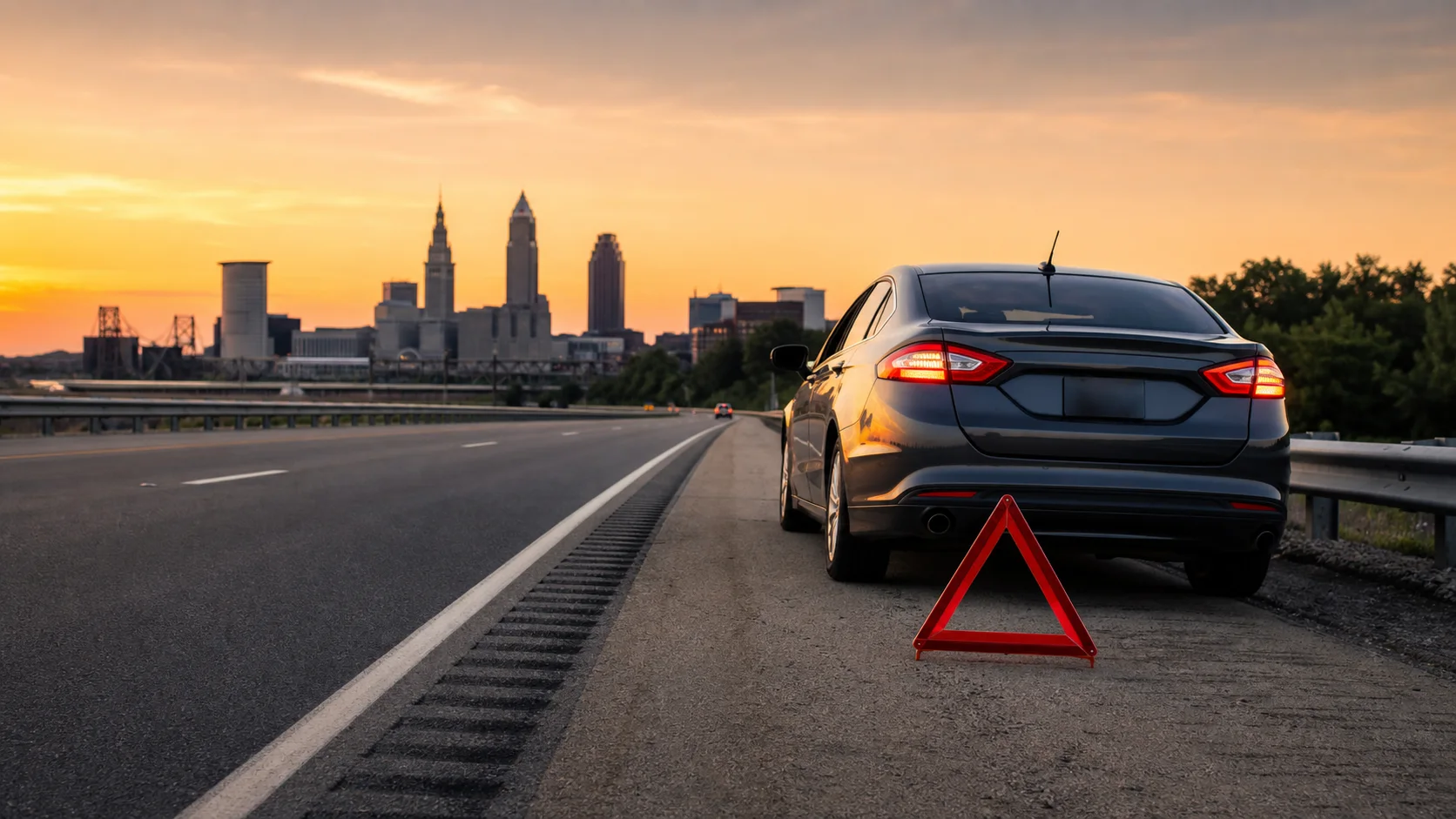
A sudden breakdown can turn an ordinary Cleveland drive into a high-pressure situation. The first priority is not diagnosing the car. It is protecting yourself, your passengers, and everyone approaching the scene.
The safest response depends on where the vehicle stops, traffic speed, weather, visibility, and whether the car can still move. Use the steps below as practical guidance, then follow instructions from police, emergency responders, or your roadside provider when they arrive.
1. Move away from active traffic if the vehicle can move
Turn on your hazard lights as soon as you notice a serious problem. If the car still responds safely, steer toward a wide shoulder, parking lot, side street, or another stable area away from moving lanes. Avoid stopping on a curve, immediately beyond a hill, or anywhere approaching drivers cannot see you clearly.
Do not continue driving when the vehicle has lost steering or braking, is overheating severely, has a damaged tire, is leaking fluid, or produces smoke. A few extra yards are not worth turning a mechanical problem into a collision.
2. Make the vehicle visible
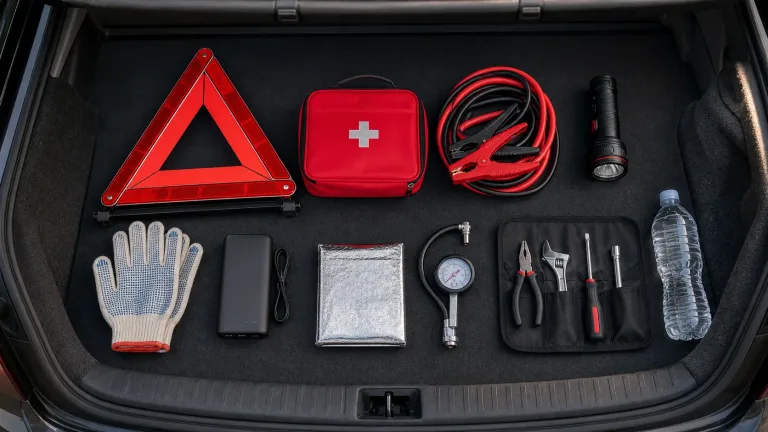
Keep the hazard lights on. At night or in poor weather, use the vehicle lights if the electrical system is working. A reflective warning triangle can improve visibility when it can be placed without exposing you to traffic. Never walk into a fast-moving lane to set out equipment.
3. Decide whether it is safer to stay inside
If the vehicle is well off the road, remaining inside with the seat belt fastened is often safer than standing beside traffic. Keep the doors locked and wait for verified help. If the vehicle is in immediate danger, such as a fire, rising water, or a position where it may be struck, leave from the side farthest from traffic and move to a protected location.
Call 911 when there is a crash, injury, fire, fuel leak, medical emergency, or an immediate traffic hazard. Roadside assistance is not a substitute for emergency services.
4. Share an exact location
A good location description saves valuable time. Use a nearby exit number, cross street, building address, mile marker, bridge name, or recognizable landmark. Your phone map can provide coordinates or a dropped pin, but only handle the phone after the vehicle is stationary and safely outside a travel lane.
When requesting help, provide:
- Your exact location and direction of travel
- The vehicle year, make, model, and color
- The problem you noticed
- Whether the vehicle rolls and steers
- Any passenger, accessibility, or safety concerns
- Your preferred repair shop or destination
5. Call the right help
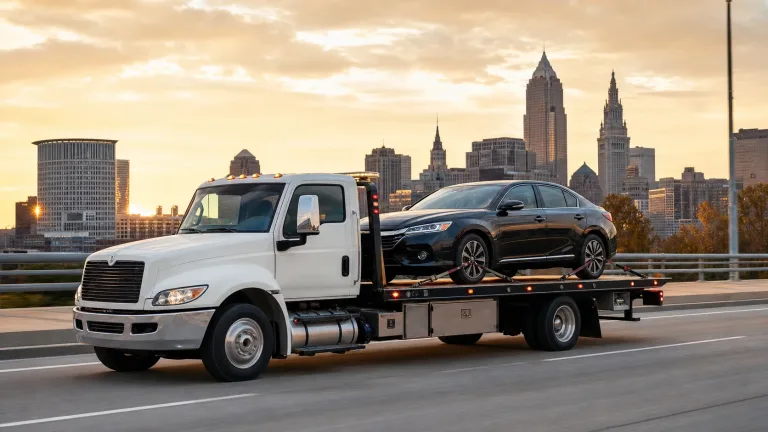
A dead battery, flat tire, lockout, or minor mechanical problem may be handled at the roadside. A collision, drivetrain problem, severe overheating, or unsafe wheel condition usually calls for towing. Our Cleveland towing and roadside services explain the common options, and the roadside assistance FAQ answers basic dispatch questions.
6. Avoid roadside repairs in an exposed location
Even a repair you know how to perform can be dangerous inches from moving traffic. Do not crawl under a vehicle on the shoulder. Do not change a tire where the car cannot sit fully on stable, level ground. If conditions are questionable, wait for trained help with warning lights and suitable equipment.
7. Give roadside crews room to work
Ohio law requires approaching drivers to use due caution and, when possible, move into a lane that is not adjacent to a stationary road service vehicle displaying appropriate warning lights. If changing lanes is not safe, drivers must slow down and proceed cautiously. Read the current requirements in Ohio Revised Code Section 4511.213. NHTSA also explains the nationwide safety principle on its Move Over: It Is the Law page.
Special note for electric and hybrid vehicles
Electric and hybrid vehicles can have model-specific towing points, battery isolation procedures, and storage requirements after a crash or fire. Tell the dispatcher the exact model and that it is electrified. NHTSA maintains manufacturer-provided emergency response and rescue guides for electric-powered vehicles.
Prepare before the next breakdown
Save your roadside contact, keep a charger in the car, and check the spare tire or inflation kit before a long drive. Confirm that your insurance or roadside membership is current. A few minutes of preparation makes it easier to think clearly when something goes wrong.
If your vehicle is disabled in Cleveland or a nearby community, move to safety first, then use our 24/7 emergency towing contact. Tell the dispatcher exactly where you are and what the vehicle is doing so the right assistance can be sent.