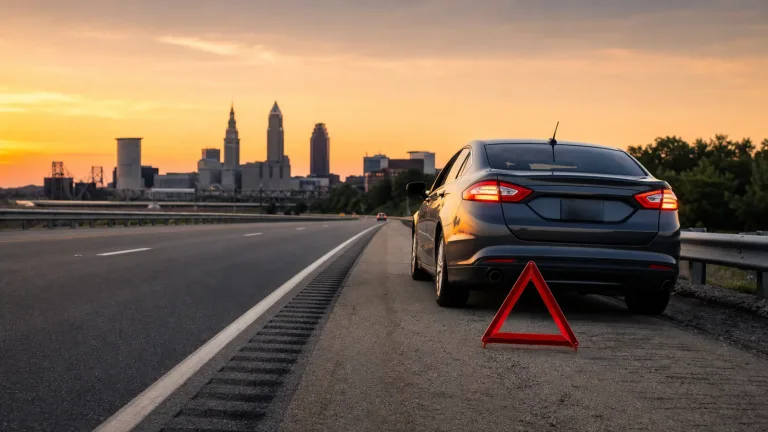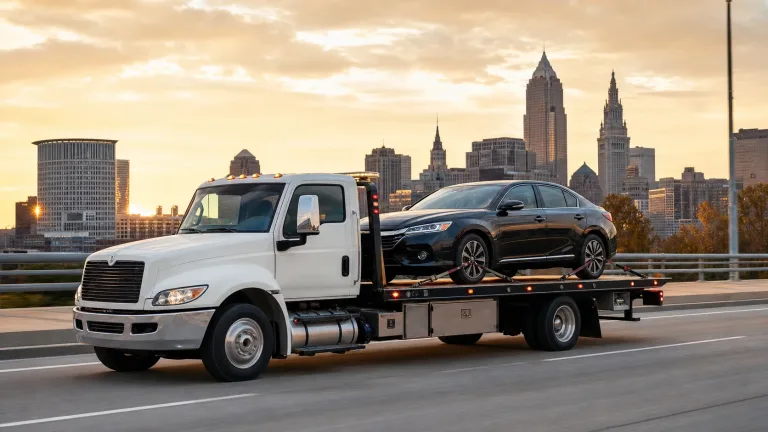
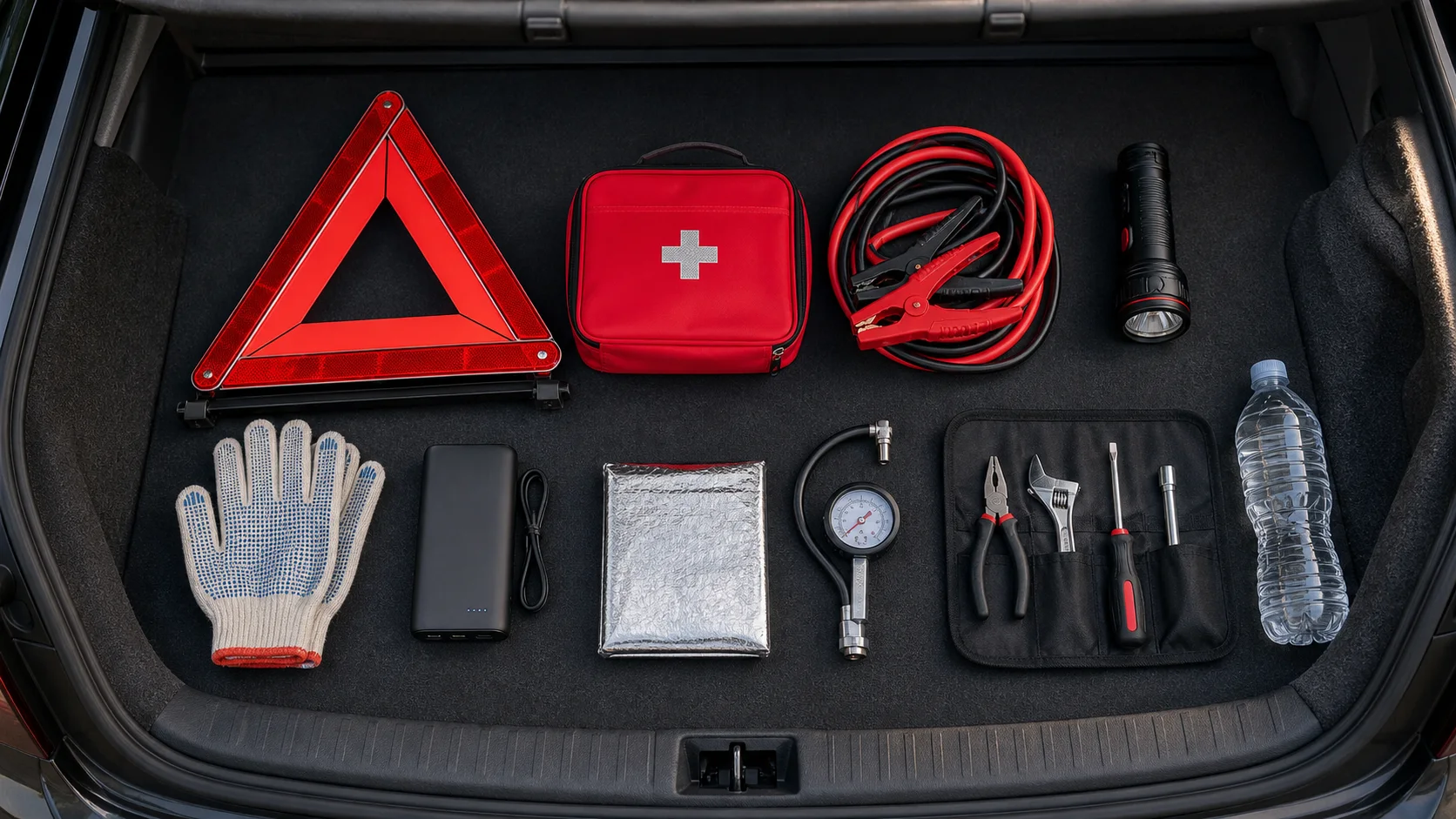
A roadside kit cannot prevent every breakdown, but it can make the wait safer and less uncomfortable. Cleveland drivers deal with summer heat, heavy rain, freezing temperatures, and lake-effect snow, sometimes in the same driving season. The best kit is compact enough to stay in the car and practical enough that you know how to use every item.
Start with these seven categories, then adjust the contents for your passengers, vehicle, route, and time of year.
1. A charged phone and backup power
Your phone helps you call for assistance, share a location, check road conditions, and contact family. Keep a charging cable that fits your device and a quality 12-volt adapter in the vehicle. A charged power bank adds a useful backup when the vehicle battery is dead.
Store important numbers in your contacts instead of relying on an internet search while stranded. Include your insurance provider, roadside service, repair shop, and an emergency contact. Save our Cleveland 24/7 towing contact so it is available when you need it.
2. A compact first-aid kit
Choose a kit with adhesive bandages, sterile gauze, antiseptic wipes, medical tape, gloves, and basic wound-care supplies. Add personal medical items that you may need during an extended delay. Check expiration dates twice a year and replace anything damaged by heat or moisture.
A roadside first-aid kit is intended for minor needs. Call 911 for serious injury, breathing difficulty, heavy bleeding, chest pain, or any situation that requires professional medical care.
3. A reliable flashlight
A bright LED flashlight makes it easier to inspect a tire, find an item in the trunk, or make yourself visible without using a phone battery. Keep spare batteries in their original packaging, or use a rechargeable light and check its charge regularly. A headlamp can keep both hands free.
4. Reflective warning equipment
A reflective vest and folding warning triangle help other drivers notice a stopped vehicle or a person outside it. Use warning equipment only when you can place it without stepping into active traffic. Hazard lights remain the first visibility tool. Flares require careful storage and handling, so follow the manufacturer instructions and local restrictions.
5. Jumper cables or a portable jump pack
Cold weather is hard on batteries, and a weak battery may fail with little warning. Heavy-duty jumper cables are useful when another suitable vehicle is available. A portable jump pack can work without a second car, but it must be kept charged and used according to its instructions.
Do not attempt a jump-start when the battery is cracked, leaking, frozen, or visibly damaged. Hybrid and electric vehicles have different systems and procedures. Consult the owner manual or request professional jump-start assistance when you are uncertain.
6. Tire and basic tool essentials
Carry a tire pressure gauge, work gloves, and the tools supplied with your vehicle. Know whether the car has a spare tire, sealant kit, or run-flat tires. If it has a spare, inspect its pressure because an unused spare can lose air over time.
A small tool roll, duct tape, and shop towels can help with limited, temporary tasks. They are not a substitute for a safe repair. Never work beneath a vehicle supported only by a jack, and do not change a tire beside fast-moving traffic.
7. Water, food, warmth, and weather protection
Keep bottled water and shelf-stable snacks for delays. Add an emergency blanket, warm gloves, a hat, and a compact rain poncho. In winter, include an ice scraper and a small amount of traction material. In summer, rotate water more frequently and avoid storing items that degrade in high heat.
NHTSA recommends carrying a roadside kit that includes a phone and charger, first-aid supplies, a flashlight, warning equipment, jumper cables, tire tools, water, food, and warm clothing. Its road trip and emergency kit guidance offers a broader checklist. Ready.gov also provides general advice for building an emergency supply kit.
Cleveland winter additions
Before freezing weather, add insulated gloves, a warm layer, an extra blanket, and a small snow brush. Keep the fuel tank reasonably full and do not let an electric vehicle sit near an empty charge during extreme cold. If snow traps the car, clear the exhaust area before running the engine and avoid using fuel-burning heaters inside the vehicle.
Check the kit every season
A kit only helps when the contents work. At the start of summer and winter, charge the power bank and jump pack, test the flashlight, inspect the first-aid supplies, check the spare tire, and replace expired food or water. Make sure every regular driver knows where the kit is stored.
Preparation reduces uncertainty, but some problems still need professional equipment. Review our Greater Cleveland service area and keep the contact details handy before the next trip.